INRA logoINRA
Systematic Review Copilot

Run a systematic review without losing methodological control

INRA SLR Copilot gives review teams a PRISMA-compliant workflow for protocol setup, citation import, screening, full-text review, extraction, risk of bias, and export, with AI assistance at each stage.

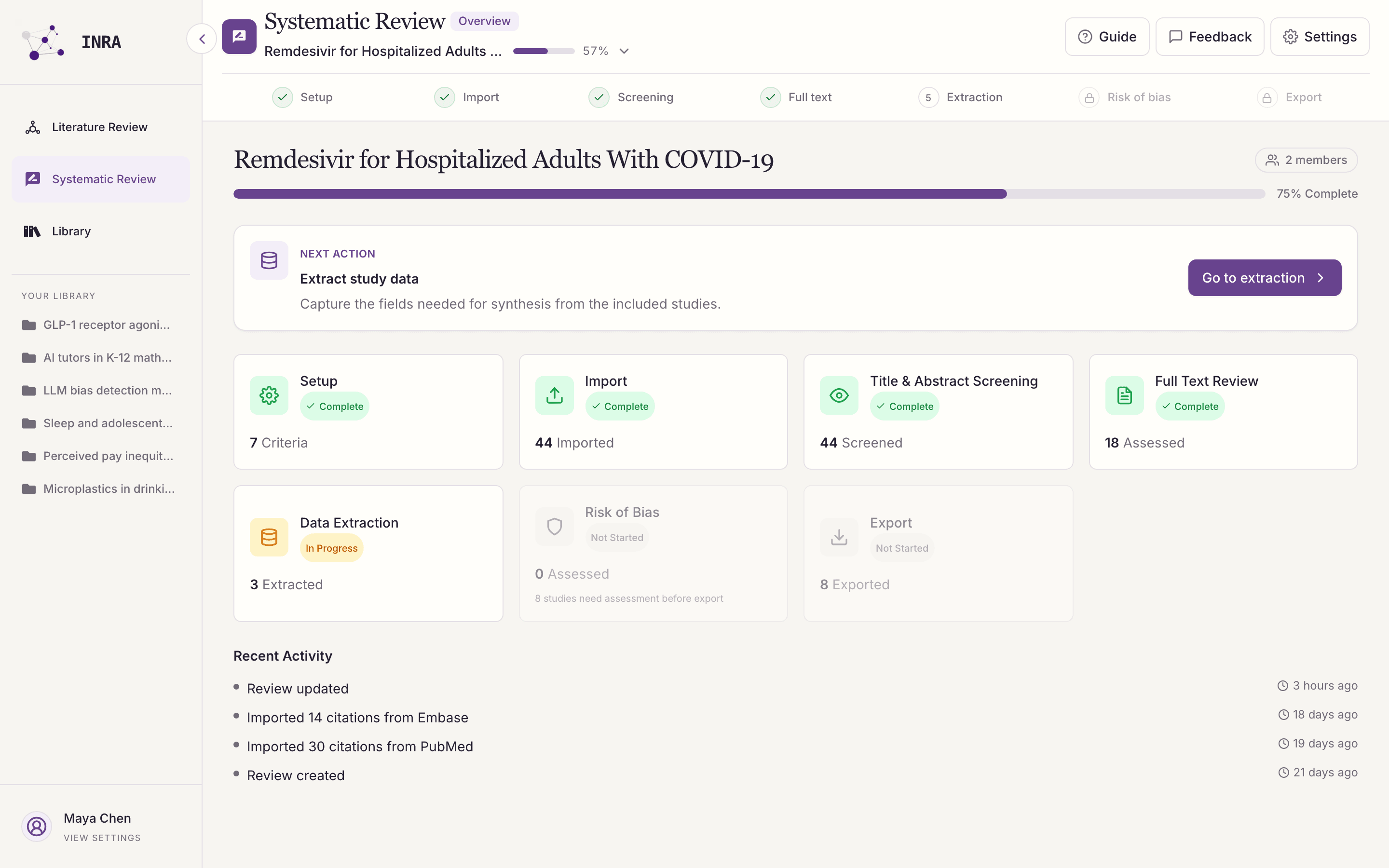
INRA Systematic Review Copilot dashboard with review phase progress
A seven-phase workspace for review teams, decisions, and PRISMA outputs.

What is INRA Systematic Review Copilot?

INRA Systematic Review Copilot is AI-assisted systematic review software for PRISMA-compliant workflows, including protocol setup, citation import, screening, full-text review, extraction, risk of bias, and export.

How does AI assist the review?

AI helps reviewers triage citations, interpret full texts, pre-fill extraction fields, and suggest risk-of-bias answers while keeping inclusion, exclusion, extraction, and judgment decisions under human control.

Who should use it?

SLR Copilot is built for clinical, academic, policy, and evidence synthesis teams that need accountable reviewer decisions, conflict resolution, PRISMA outputs, and exportable review data.

Workflow

Seven phases from protocol to export

Setup

Define the review question, eligibility criteria, reviewer settings, and team workspace.

Import

Import citation files, search databases, resolve IDs, deduplicate records, and track sources.

Screening

Use dual screening, blinded voting, AI suggestions, exclusion reasons, and conflict queues.

Full Text

Review PDFs, vote on eligibility, require exclusion reasons, and resolve disagreements.

Extraction

Use configurable templates, AI extraction assist, dual extraction, and consensus review.

Risk of Bias

Assess studies with RoB 2 by default, with other tools configurable for review needs.

Export

Export PRISMA-compliant diagrams, review data, reference files, and IRR outputs.

PRISMA Workflow

How SLR Copilot supports systematic review methodology

INRA is designed around review phases that teams already recognize: protocol setup, citation import, screening, eligibility, extraction, risk-of-bias assessment, and export. AI support is added inside those phases without replacing reviewer judgment.

Protocol setup
Define questions, criteria, reviewers, and workspace settings before citations move through the review.
Screening
Run title and abstract screening with include, maybe, and exclude decisions, AI suggestions, and conflict tracking.
Full-text eligibility
Review PDFs alongside study metadata and record eligibility decisions with required reasons.
Extraction
Capture study fields in structured templates with AI assistance and source-linked values.
Risk of bias
Assess included studies with RoB 2 by default and reviewer-controlled overrides.
Export
Produce PRISMA-compliant diagrams, references, review counts, and structured evidence files.

Product Screens

See the Co-Pilot workflow across each review phase

SLR Copilot keeps reviewers, PDFs, decisions, extraction fields, risk-of-bias assessment, and PRISMA outputs in one review-scoped workspace.

Phase 1

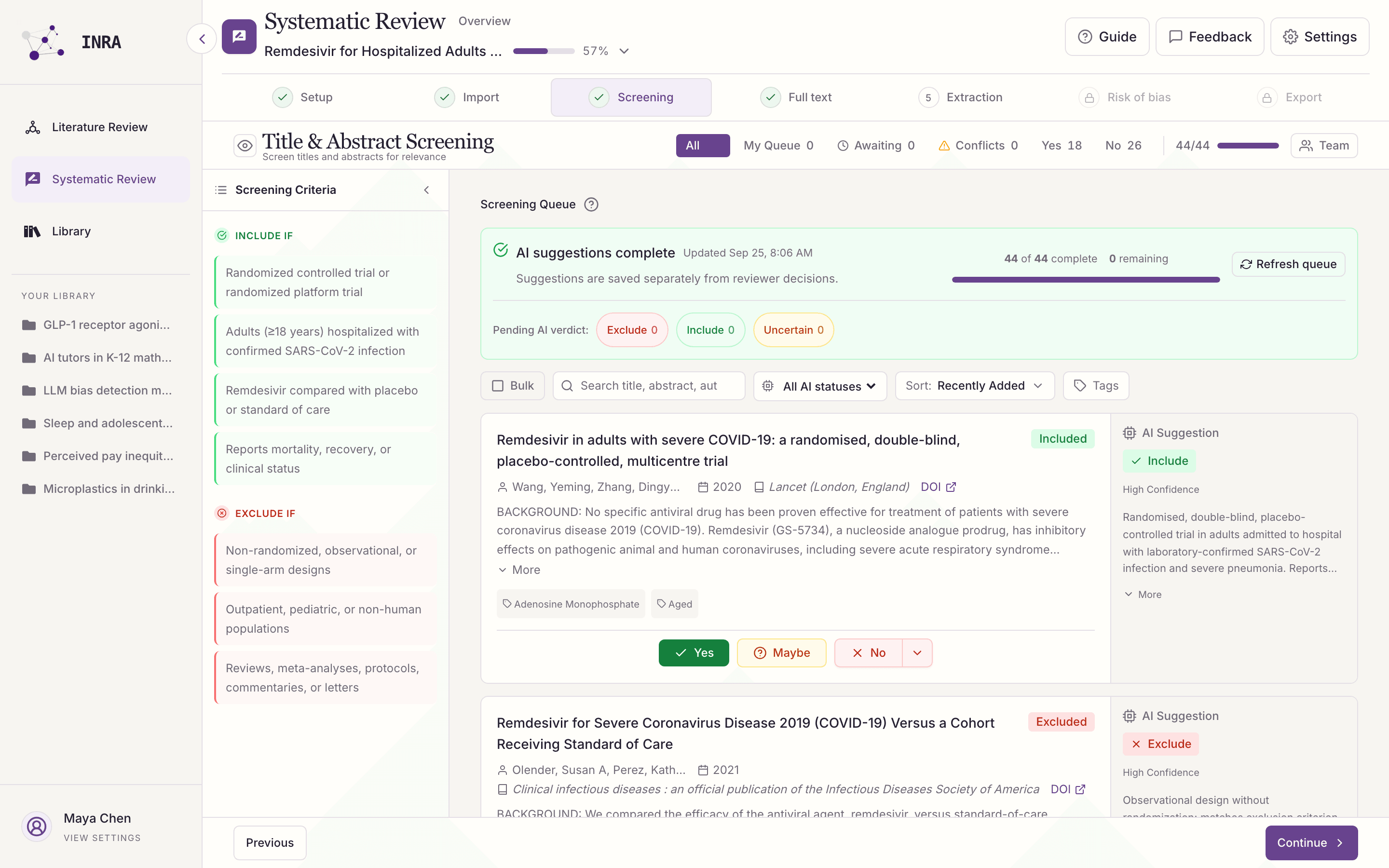
Screening phase

Reviewer queue, citation cards, include/maybe/exclude decisions, and AI suggestions in one screening workspace.

INRA SLR Copilot title and abstract screening queue with citation cards and AI suggestions
Phase 2

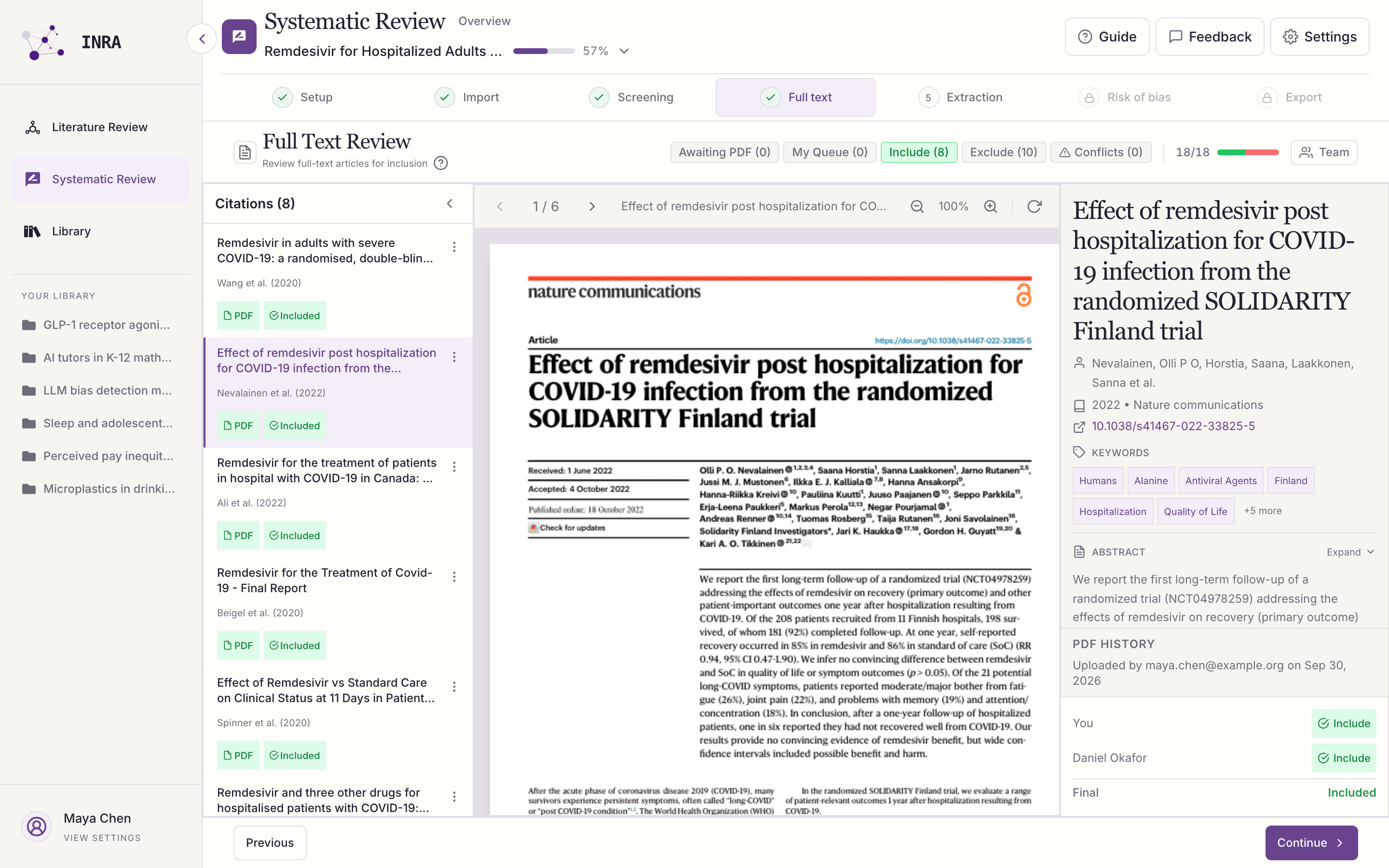
Full Text phase

PDF queue, embedded full-text viewer, study metadata, and include/exclude controls for eligibility review.

INRA SLR Copilot full-text review workspace with PDF viewer and eligibility controls
Phase 3

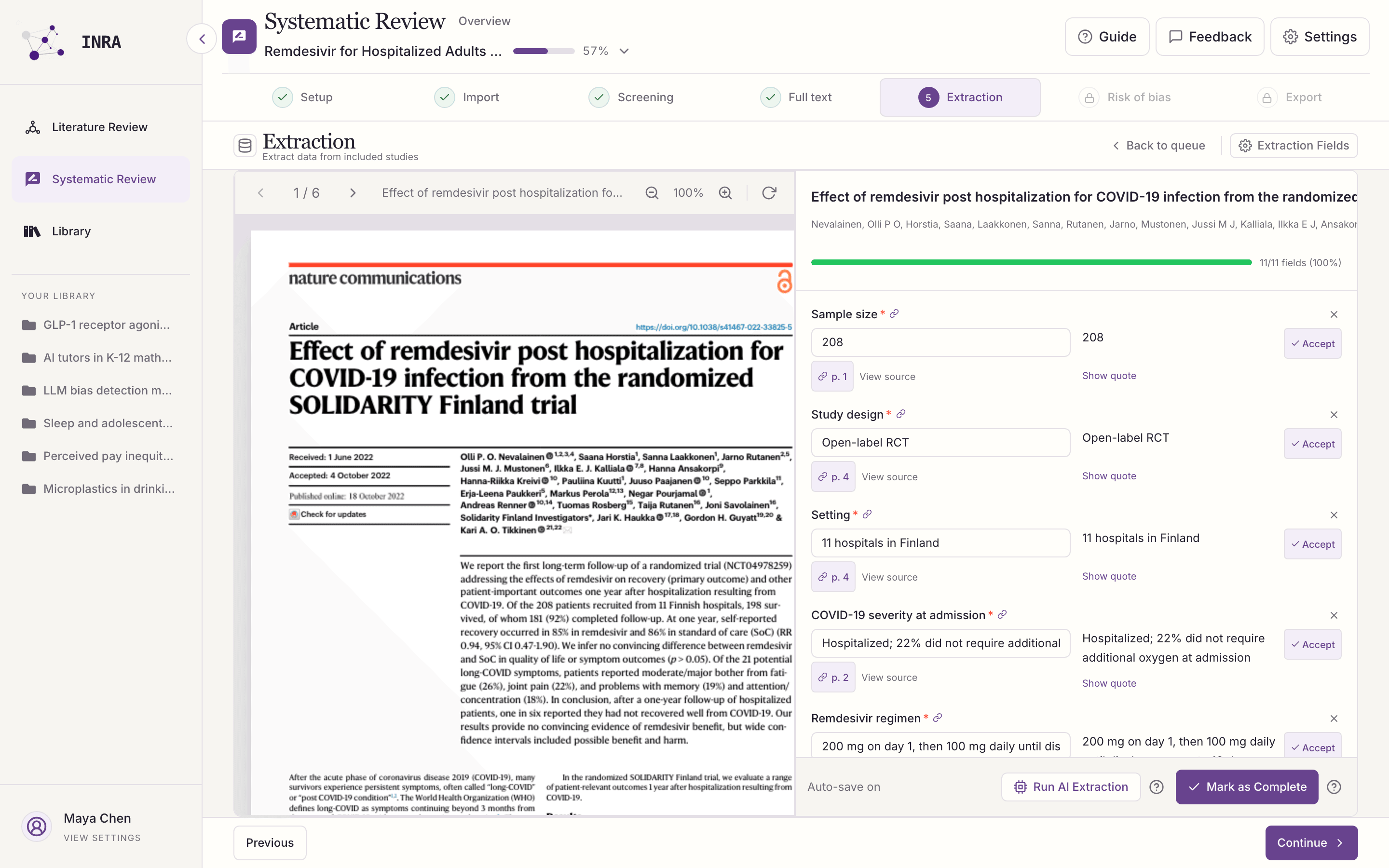
Extraction phase

Study PDF beside structured extraction fields, source-linked values, AI extraction, and completion controls.

INRA SLR Copilot extraction workspace with PDF and structured extraction fields
Phase 4

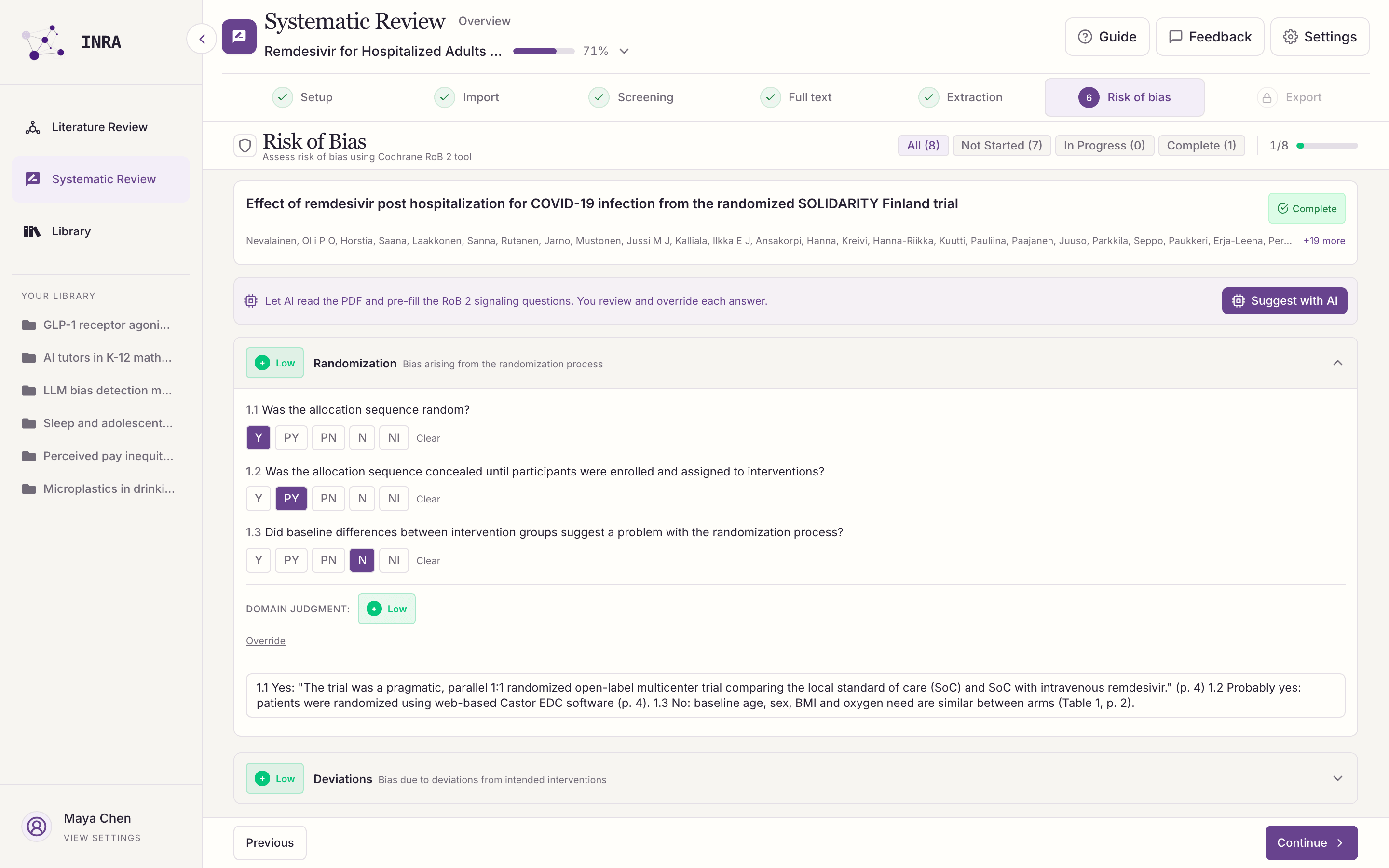
Risk of Bias phase

RoB 2 domains, signaling questions, AI suggestion support, reviewer overrides, and domain judgments.

INRA SLR Copilot risk of bias assessment screen with RoB 2 signaling questions
Phase 5

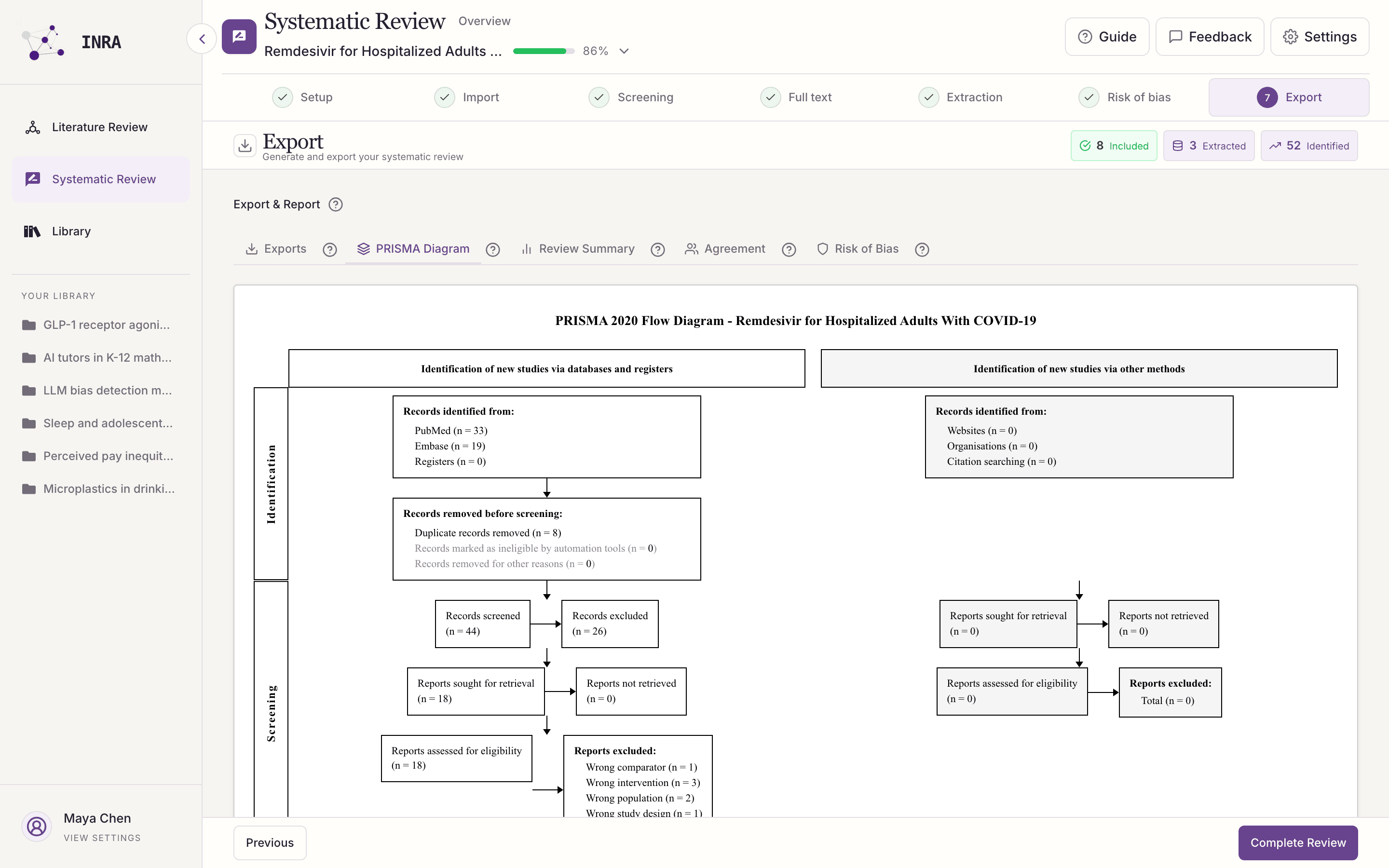
Export phase

PRISMA diagram and export-ready review counts, references, extracted data, and included-study outputs.

INRA SLR Copilot export screen with PRISMA flow diagram

Use Cases

Built for rigorous review projects with accountable decisions

SLR Copilot is for teams that need more than a draft. It gives reviewers a workflow for decisions, conflicts, full-text PDFs, extraction, risk of bias, and exportable review evidence.

Clinical and medical systematic reviews
Health policy evidence synthesis
Meta-analysis preparation
Dissertation and thesis systematic reviews
Lab or department review projects
Grant-funded evidence review teams

SLR Copilot vs manual review management

Dimension
Manual or spreadsheet workflow
INRA SLR Copilot
Screening
Votes and reasons tracked across files
Dual screening, blinded voting, reasons, conflicts
Full text
PDF collection and decisions handled separately
PDF upload or fetch workflow with eligibility votes
Extraction
Custom spreadsheets and manual consensus
Templates, AI assist, dual extraction, consensus
Risk of bias
Separate forms and manual synthesis
Review-scoped RoB workflow with configurable tools
Exports
Manual PRISMA counts and references
PRISMA-compliant diagrams and structured review data

FAQ

Systematic review questions

What is a systematic review copilot?

A systematic review copilot is software that helps teams move through a rigorous review workflow while keeping reviewer decisions under human control. INRA SLR Copilot supports protocol setup, import, screening, full-text review, extraction, risk of bias, and PRISMA-compliant exports.

Is SLR Copilot fully automated?

No. AI assists the workflow, but SLR Copilot is human-in-the-loop. Reviewers make inclusion, exclusion, extraction, and risk-of-bias decisions, while the system helps organize work, surface suggestions, track conflicts, and produce exports.

Is INRA a Covidence alternative?

INRA SLR Copilot is designed for teams that need systematic review workflow support, including screening, full-text review, extraction, risk of bias, conflict resolution, PRISMA outputs, and AI assistance. It can be evaluated as an AI-native alternative to screening-first or spreadsheet-based workflows.